


If you are comparing sea scooters for snorkeling, recreational diving, underwater photography, or ocean exploration, Sublue Navbow, Navbow+, LEFEET P1, and LEFEET P1 XR are four models worth considering.
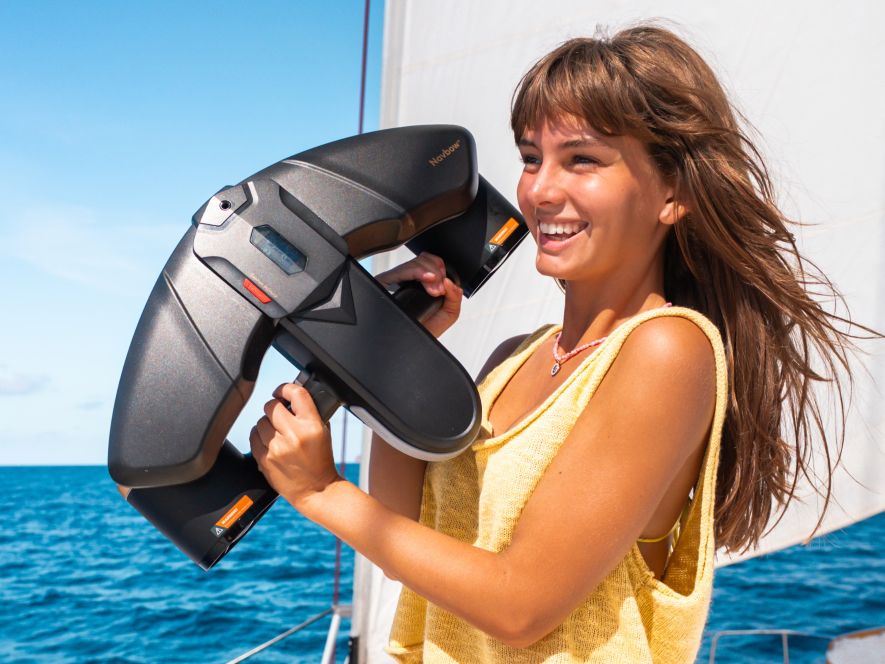
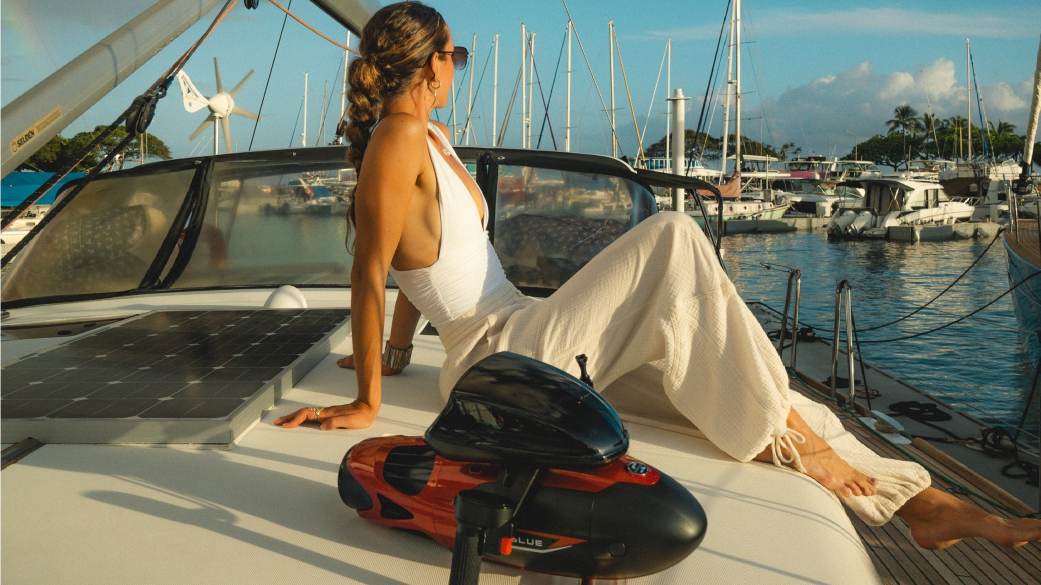
The two brands take somewhat different approaches. Sublue Navbow Series is designed as a complete recreational underwater scooter platform, combining dual-motor propulsion, positive buoyancy, removable batteries, app connectivity, and—on Navbow+—additional underwater information such as depth, temperature, and digital compass data. LEFEET P1 and P1 XR focus more heavily on compactness, modularity, lightweight construction, and higher rated speed on the XR model.
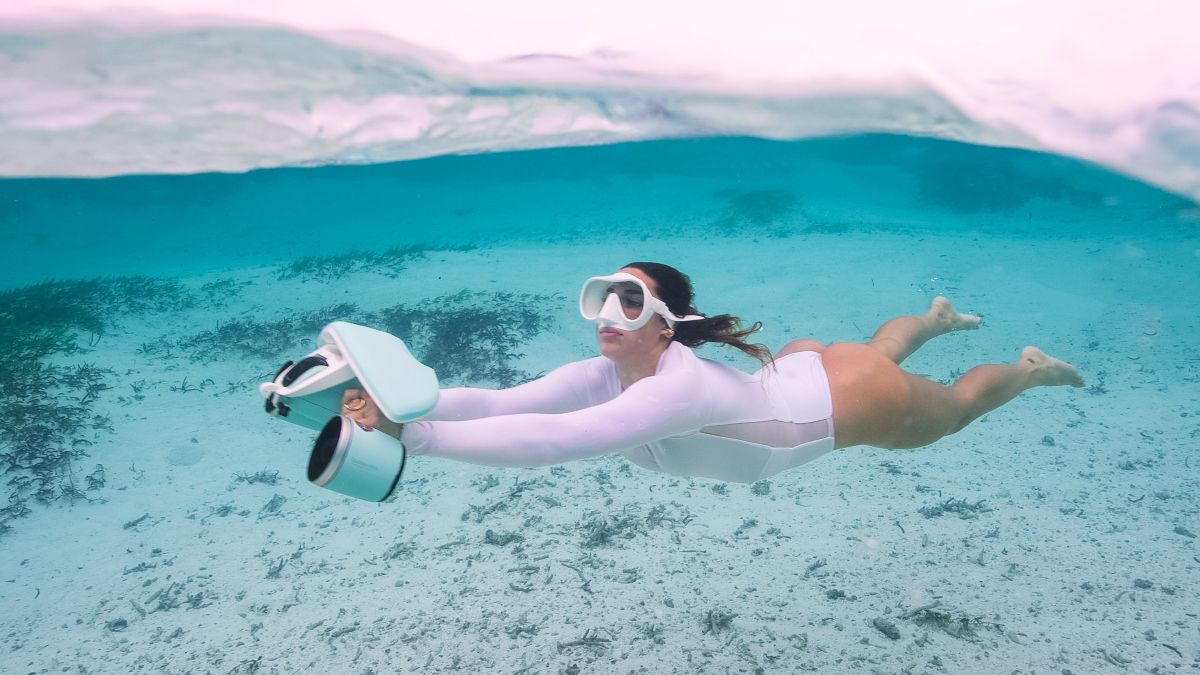
For most users looking for an all-around sea scooter for snorkeling, family water activities, underwater filming, and ocean vacations, the Sublue Navbow Series is the more balanced choice. If maximum compactness, deeper rated operation, or modular equipment configurations are your priorities, LEFEET P1/P1 XR deserve consideration.
Quick Answer: Which Is Better, Sublue Navbow or LEFEET P1?
Sublue Navbow is the better all-around choice for recreational snorkeling and ocean activities, while LEFEET P1/P1 XR are particularly attractive for users who prioritize lightweight modular equipment and higher rated depth.
The biggest differences are not simply about maximum speed.
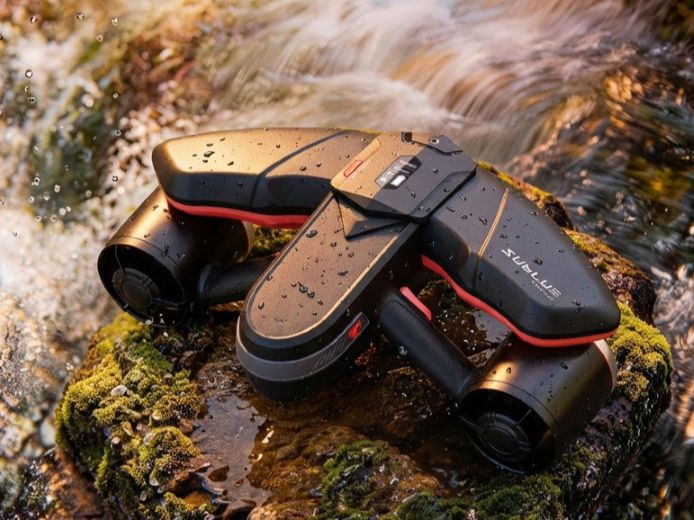
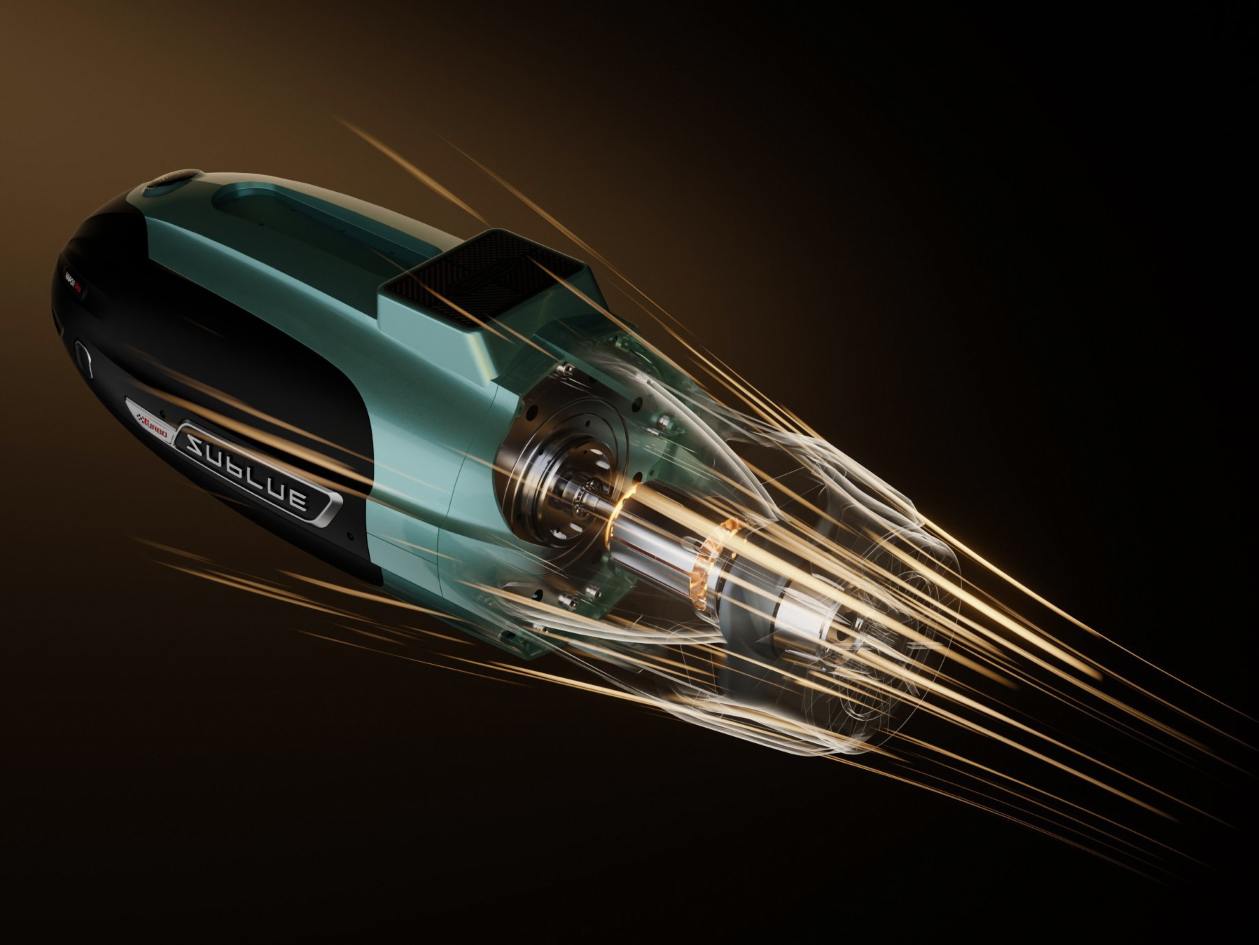
- Sublue Navbow offers 137 N maximum thrust, 60-minute battery life, positive integrated buoyancy, app connectivity, and a 40 m depth rating.
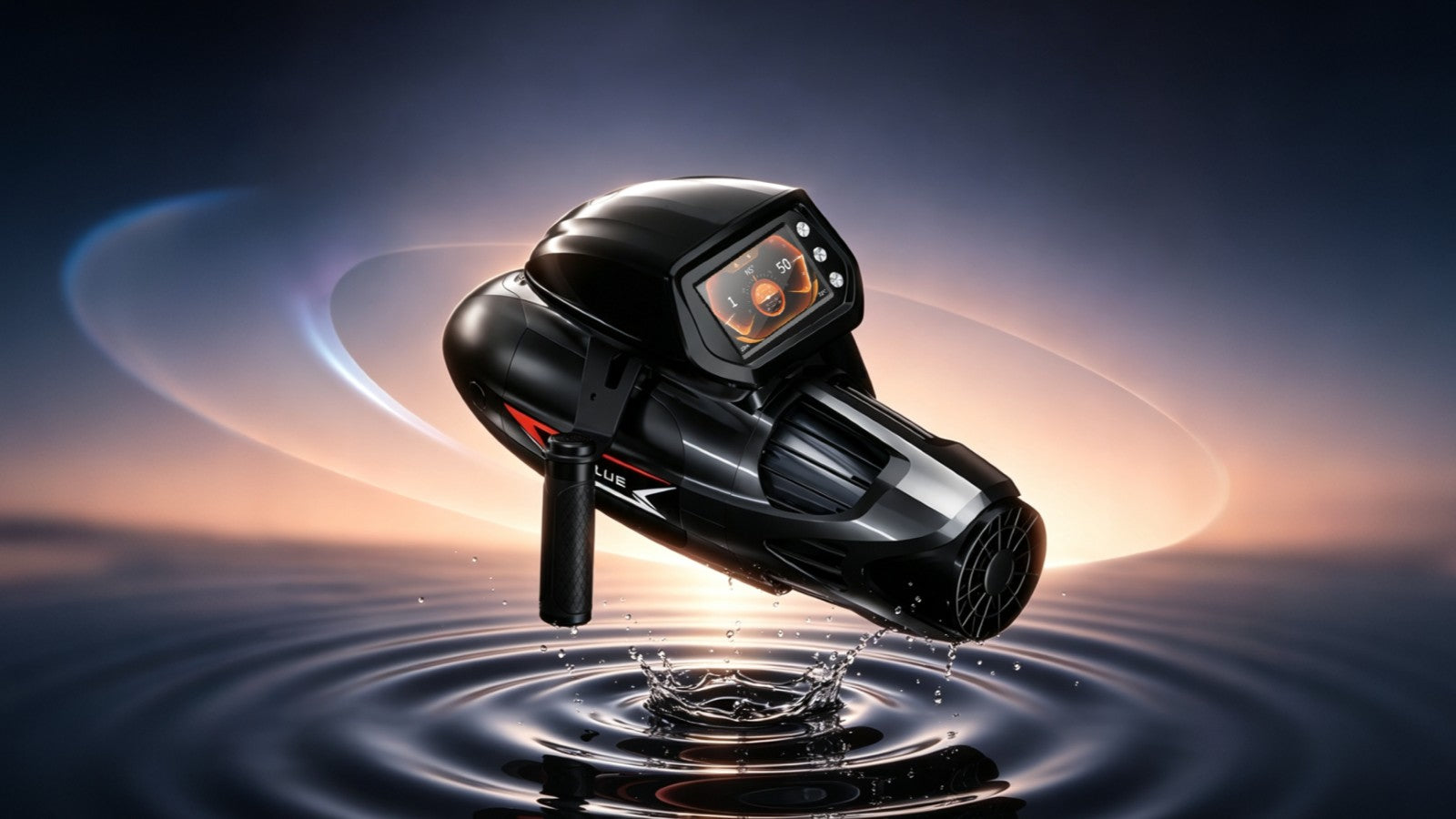
- Sublue Navbow+ retains the same core propulsion specifications but adds more advanced underwater functions, including a digital compass, depth and temperature sensors, and customizable depth alarm.
- LEFEET P1 weighs 2.4 kg, offers up to 60 minutes of runtime and a 60 m depth rating.
- LEFEET P1 XR increases the battery capacity to 160 Wh, runtime to 90 minutes, and maximum speed to 2.3 m/s, while weighing 3.2 kg.
So the choice depends on what matters most:
Choose Sublue Navbow for a balanced snorkeling and ocean-exploration experience. Choose Navbow+ if you want more professional underwater information. Choose LEFEET P1/P1 XR if lightweight modularity, deeper rated operation, or extended XR runtime is your priority.

Sublue Navbow vs LEFEET P1 & P1 XR: At a Glance
The following comparison focuses on the four models most relevant to this buying decision.
| Specification |
Sublue Navbow |
Sublue Navbow+ |
LEFEET P1 |
LEFEET P1 XR |
| Price | $ 999 |
$ 1199 |
$ 1099 |
$ 1299 |
| Weight incl. Battery | 4.5 kg / 9.9 lb |
4.5 kg / 9.9 lb |
2.4 kg |
3.2 kg |
| Dimensions | 486 × 327 × 177 mm |
486 × 327 × 177 mm |
247 × 315 × 130 mm |
247 × 401 × 130 mm |
| Speed | 2 / 1.5 / 1 m/s |
2 / 1.5 / 1 m/s |
2.0 / 1.8 / 1.5 / 1.3 m/s |
2.3 / 2.0 / 1.8 / 1.5 / 1.3 m/s |
| Max Thrust |
137 N |
137 N |
90 N |
130 N |
| Battery Power | 159.84 Wh |
159.84 Wh |
100 Wh |
160 Wh |
| Battery Life | 60 min |
60 min |
60 min |
90 min |
| Charge Time | 3.5 h |
2 h |
1.5 h |
2.5 h |
| Depth | 40 m |
40 m |
60 m |
60 m |
| Buoyancy Chamber |
Positive, integrated |
Positive, integrated |
No | No |
| Removable Battery | Yes |
Yes |
Yes |
Yes |
| App | Yes |
Yes |
No | No |
1. Speed and Thrust: Which Scooter Feels More Capable?
Speed is one of the first specifications shoppers look at when choosing an underwater scooter, but it should not be considered alone.
The Sublue Navbow and Navbow+ reach 2 m/s, with three speed modes:
- 1 m/s — Free
- 1.5 m/s — Sport
- 2 m/s — Turbo
They also provide 137 N of maximum thrust.
The LEFEET P1 is rated at 2.0 m/s maximum speed and 90 N thrust, while the P1 XR reaches 2.3 m/s and 130 N thrust according to the comparison specifications.
This creates an interesting result.
P1 XR has the highest listed top speed, but Navbow has the highest listed maximum thrust among these four models.
For snorkeling, top speed is rarely the only consideration. Smooth acceleration, control at lower speeds, stability, and the ability to maintain forward movement against light current can matter more than the last fraction of a meter per second.
Verdict
For balanced recreational propulsion: Sublue Navbow.
For maximum listed speed: LEFEET P1 XR

2. Battery Life: Is 60 Minutes Enough?
Battery life becomes much more important when an underwater scooter is being used during a full-day ocean vacation, yacht trip, or snorkeling excursion.
Sublue Navbow / Navbow+
Both models provide up to 60 minutes of battery life, with a 159.84 Wh battery in the comparison specifications.
Navbow+ also supports fast charging, with a listed charging time of approximately 2 hours with the fast charger. Sublue's current product information also describes quick-swap battery use and optional additional batteries.
LEFEET P1
P1 uses a 100 Wh battery and provides up to 60 minutes of runtime.
LEFEET P1 XR
P1 XR uses a larger 160 Wh battery and extends runtime to up to 90 minutes. LEFEET also promotes quick battery replacement and 100 W USB-C PD charging.
Verdict
If you regularly spend long periods in the water, P1 XR has the strongest single-charge runtime on paper.
For typical snorkeling sessions, however, 60 minutes is already a substantial operating window, and Navbow's removable battery design provides another way to extend a day on the water.
3. Weight and Portability:
This is one area where the numbers are straightforward.
The comparison shows:
- Navbow: 4.5 kg including battery
- Navbow+: 4.5 kg including battery
- LEFEET P1: 2.4 kg
- LEFEET P1 XR: 3.2 kg
That makes P1 substantially lighter than Navbow.
LEFEET's official product information also emphasizes the compact design of the P1/P1 XR and positions the system for applications including freediving, recreational diving, SUP, underwater photography, and backup propulsion.
Verdict
LEFEET P1 wins clearly for lightweight portability.
If your priority is minimizing equipment weight, this is one of the strongest reasons to consider LEFEET.
4. Buoyancy: An Important Difference for Snorkeling
Weight is not the same thing as how a scooter behaves once it enters the water.
The comparison table lists integrated positive buoyancy for Navbow and Navbow+, while the P1 and P1 XR do not have an integrated buoyancy chamber.
For recreational users, especially beginner snorkelers, this distinction is worth understanding.
A positively buoyant underwater scooter is designed to remain at or return toward the surface when released, making it easier to recover.
That can be useful when:
- You need to adjust a mask
- You want to stop filming
- Another family member wants to take over
- You need to change your grip
- You temporarily release the scooter
This does not make buoyancy a substitute for proper water-safety practices, but it can influence the overall handling experience.
Verdict
Sublue Navbow has the clearer advantage for users who value integrated positive buoyancy.
This is particularly relevant to family water activities, beginner snorkeling, and recreational ocean use.

5. Navbow vs P1/P1 XR for Underwater Photography
An sea scooter increasingly functions as more than propulsion equipment.
It can become part of an underwater filming setup, especially when users combine it with:
- Action cameras
- Waterproof phone cases
- Underwater lights
- Camera mounts
- Selfie sticks
- Diving accessories
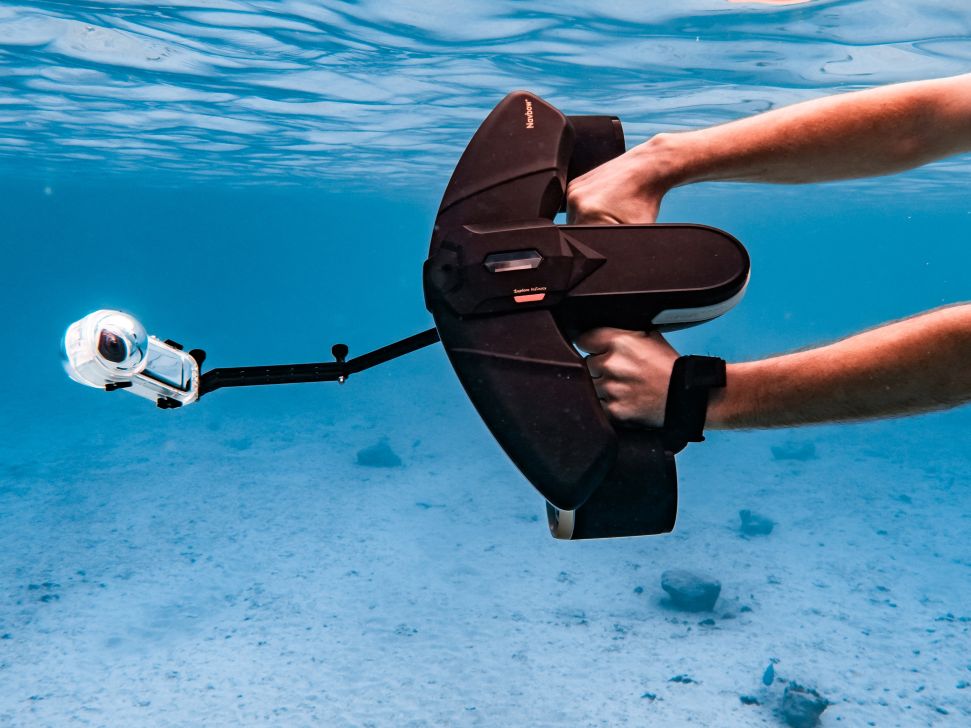
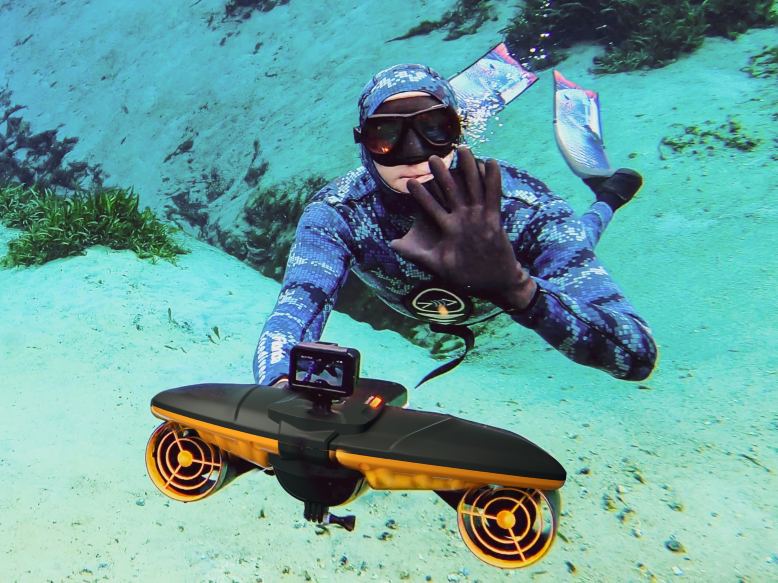
Sublue positions Navbow as an underwater photography platform, with mounting points designed for cameras, lights, and other equipment.
LEFEET also positions P1/P1 XR for underwater photography and provides a modular camera-mount approach.
The important difference is therefore not simply whether either product can carry a camera.
It is how the scooter fits into the overall experience.
For casual snorkeling footage, both can work.
For users who want a more integrated ocean experience + propulsion + camera + smart information setup, Navbow offers a more complete ecosystem, particularly when combined with Sublue accessories.
Verdict
Both are viable for underwater filming. Navbow has the stronger all-around ecosystem.
6. Navbow vs Navbow+: Which One Should You Buy?
This is an important distinction because Navbow and Navbow+ are not simply two different performance levels.
Their core propulsion specifications are similar:
- 2 m/s maximum speed
- 137 N maximum thrust
- 60-minute runtime
- 40 m depth rating
- 159.84 Wh battery
- Removable battery
The main difference is the information and smart-control capability.
Sublue Navbow
Best for:
- Snorkeling
- Family water activities
- Recreational diving
- Ocean vacations
- Underwater filming
- General underwater exploration
Sublue Navbow+
Adds more professional underwater functions, including:
- Digital compass
- Water-depth information
- Temperature information
- Customizable depth alarm
- More detailed real-time underwater data
Sublue's current product page specifically describes Navbow+ as providing real-time depth, temperature, battery and operating information through its OLED display, alongside digital compass and app functions.
Simple decision
Choose Navbow if you want a versatile recreational underwater scooter.
Choose Navbow+ if you want more underwater information and monitoring capabilities.
7. Which Underwater Scooter Is Better for Different Activities?
| Use Case |
Recommended Choice |
Why |
| Beginner snorkeling | Sublue Navbow | Positive buoyancy, simple 3-speed control |
| Family water activities | Sublue Navbow |
Balanced handling and integrated buoyancy |
| Ocean vacation | Sublue Navbow |
Good balance of performance, battery and usability |
| Advanced recreational diving | Sublue Navbow+ | Additional depth, temperature and compass information |
| Underwater filming | Navbow / Navbow+ |
Camera mounting and smart information |
| Longer single-charge sessions | LEFEET P1 XR |
Up to 90 minutes |
| Deeper-rated operation | LEFEET P1 / P1 XR |
60 m rated depth |
| Modular equipment setup | LEFEET P1 / P1 XR |
Modular design |
| Complete recreational underwater scooter experience | Sublue Navbow Series |
More integrated recreational feature set |
Sublue Navbow vs LEFEET: Pros & Cons
Sublue Navbow
Pros
- 137 N maximum thrust
- 2 m/s maximum speed
- Up to 60 minutes runtime
- Positive integrated buoyancy
- Removable battery
- App connectivity
- Designed for snorkeling, recreational diving and underwater filming
- Broad accessory ecosystem
Cons
- Heavier than LEFEET P1 and P1 XR
- 40 m depth rating is lower than LEFEET's 60 m rating
Sublue Navbow+
Pros
- Same strong core propulsion as Navbow
- Digital compass
- Depth and temperature sensors
- Customizable depth alarm
- OLED real-time information
- App connectivity
- Positive integrated buoyancy
- Strong option for experienced recreational divers and underwater explorers
Cons
- Heavier than LEFEET P1/P1 XR
- Higher price than Navbow
LEFEET P1
Pros
- 2.4 kg lightweight design
- Modular design
- 1.5-hour charging time
Cons
- Lower maximum thrust than Navbow
- No integrated positive buoyancy chamber
- No app connectivity
- Less integrated underwater information
LEFEET P1 XR
Pros
- 2.3 m/s maximum speed
- Up to 90 minutes runtime
- 60 m depth rating
- 5 speed levels
Cons
- Heavier than the standard P1
- No integrated positive buoyancy chamber
- No app connectivity
- The additional runtime and performance may be unnecessary for casual snorkeling
LEFEET P1
Pros
- 2.4 kg lightweight design
- Modular design
- 1.5-hour charging time
Cons
- Lower maximum thrust than Navbow
- No integrated positive buoyancy chamber
- No app connectivity
- Less integrated underwater information
LEFEET P1 XR
Pros
- 2.3 m/s maximum speed
- Up to 90 minutes runtime
- 60 m depth rating
- 5 speed levels
Cons
- Heavier than the standard P1
- No integrated positive buoyancy chamber
- No app connectivity
- The additional runtime and performance may be unnecessary for casual snorkeling

FAQ
Is Sublue Navbow better than LEFEET P1?
For most recreational users, Sublue Navbow is the more balanced underwater scooter. It combines 137 N thrust, 60-minute runtime, positive buoyancy, removable battery and app connectivity. LEFEET P1 is lighter and deeper-rated, making it attractive to users who prioritize portability and modularity.
Which is better for beginner snorkeling, Navbow or LEFEET?
Sublue Navbow is the stronger choice for beginner snorkeling, particularly because of its integrated positive buoyancy and straightforward three-speed control.
Is Navbow+ worth buying over Navbow?
For casual snorkeling, Navbow is usually sufficient. Navbow+ becomes more attractive when you want digital compass, depth, temperature and customizable depth-alarm functions for more advanced underwater exploration.
Which is better for underwater photography?
Both product families can support underwater photography and filming. Navbow is particularly suitable for users who want an integrated underwater scooter and camera setup.
Is a deeper-rated underwater scooter always better?
No. A 60 m depth rating does not automatically make a scooter better for snorkeling. Most recreational snorkelers stay far shallower than this. For beginner and family use, handling, buoyancy, battery life, controls and overall usability may matter more than maximum rated depth.
Final Verdict: Sublue Navbow or LEFEET P1/P1 XR?
There is no single winner for every type of underwater scooter user.
LEFEET P1 and P1 XR win on compactness and depth rating.
But if the goal is to buy one versatile underwater scooter for snorkeling, family water activities, underwater filming, recreational diving and ocean vacations, Sublue Navbow is the more balanced choice.
Overall recommendation
1.Sublue Navbow — Best all-around underwater scooter for snorkeling and ocean recreation
A strong combination of 137 N thrust, 2 m/s speed, 60-minute runtime, positive buoyancy, removable battery and app connectivity makes it a versatile choice for everyday ocean use.
2. Sublue Navbow+ — Best for more advanced underwater exploration
Navbow+ keeps the core Navbow performance while adding digital compass, depth, temperature and customizable depth-alarm functions. It is the better choice when underwater information matters as much as propulsion.
3. LEFEET P1 XR — Best for lightweigh and longer runtime
P1 XR stands out with 2.3 m/s speed, 130 N thrust, 160 Wh battery and up to 90 minutes of runtime, making it compelling for users who want more endurance and a modular system.
4. LEFEET P1 — Best lightweight option
At 2.4 kg, P1 is the easiest option to carry and transport while still offering 60 minutes of runtime and a 60 m depth rating.

Ultimately, the right sea scooter depends on how you use it. For a beginner snorkeling trip, a family ocean vacation, or a weekend of water sports and underwater filming, Navbow provides a particularly balanced package. For users building a more modular diving or exploration setup, LEFEET P1/P1 XR offers a compelling alternative.
And for users who want to move beyond basic propulsion into a more information-rich ocean experience, Sublue Navbow+ provides the strongest combination of recreational usability and professional-style underwater data within the Navbow Series.

Share:
Sublue Navbow vs Asiwo: Which Sea Scooter Offers Better Value? Quick Answer