


Quick Answer: How Can Parents Pass on the Spirit of Adventure?
The best way to pass on a spirit of adventure is to make children part of the experience.
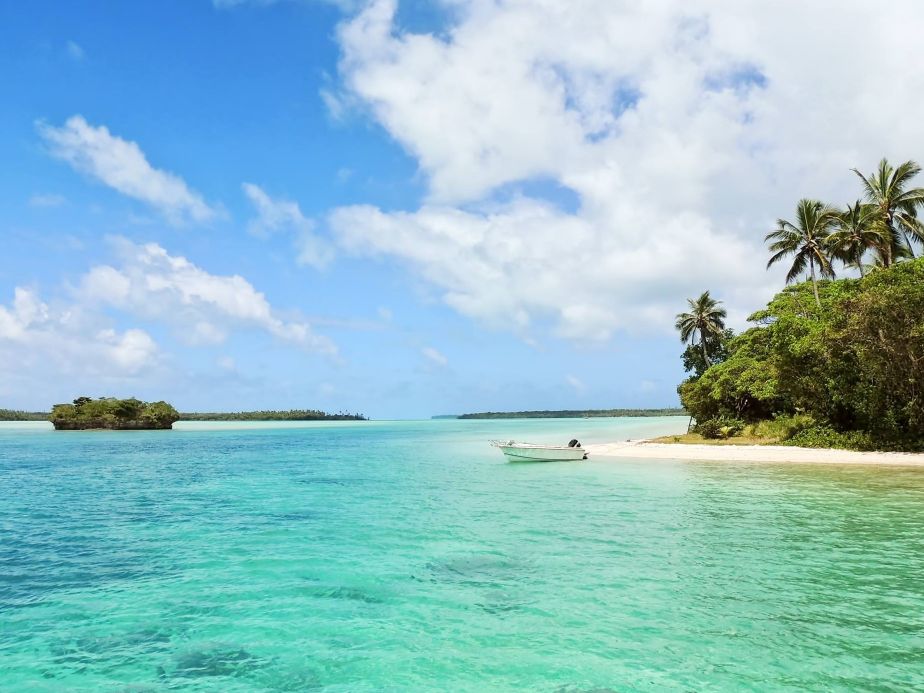
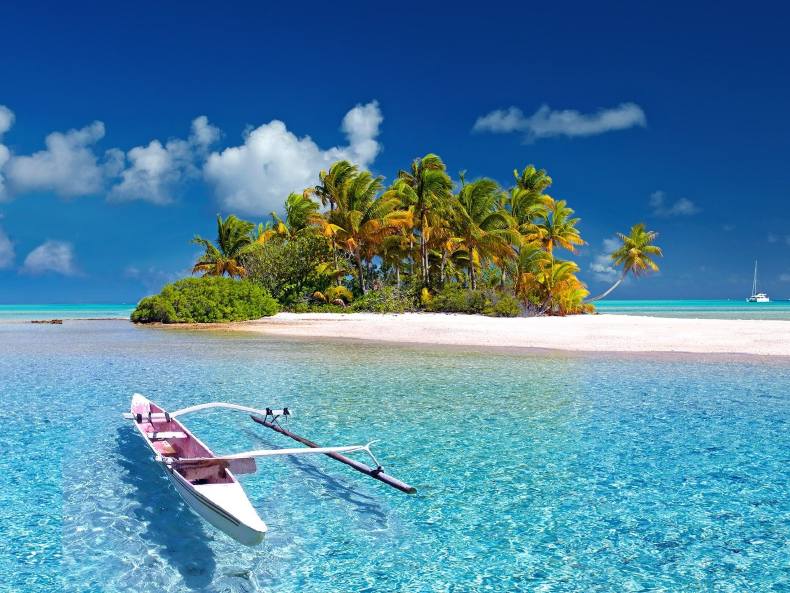
A family ocean trip does not need an ambitious itinerary. It can start with something as simple as walking along the beach, looking for shells, swimming together, trying beginner snorkeling, or taking a short boat trip.
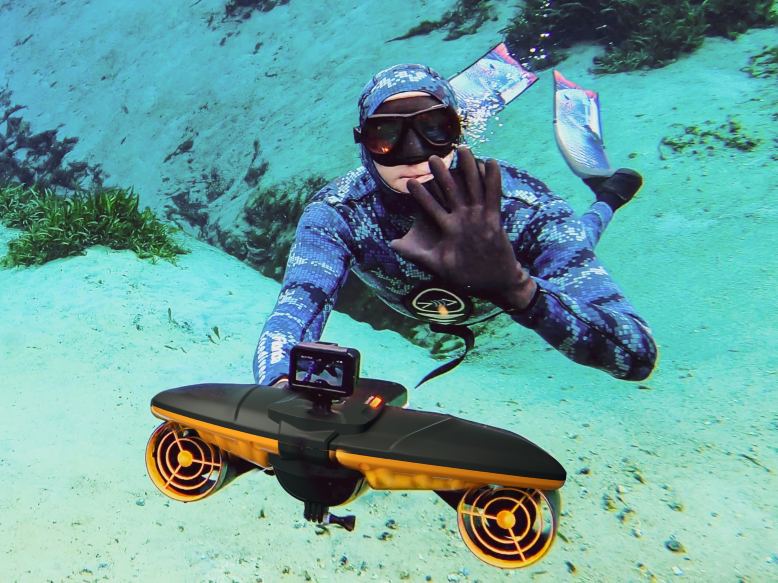
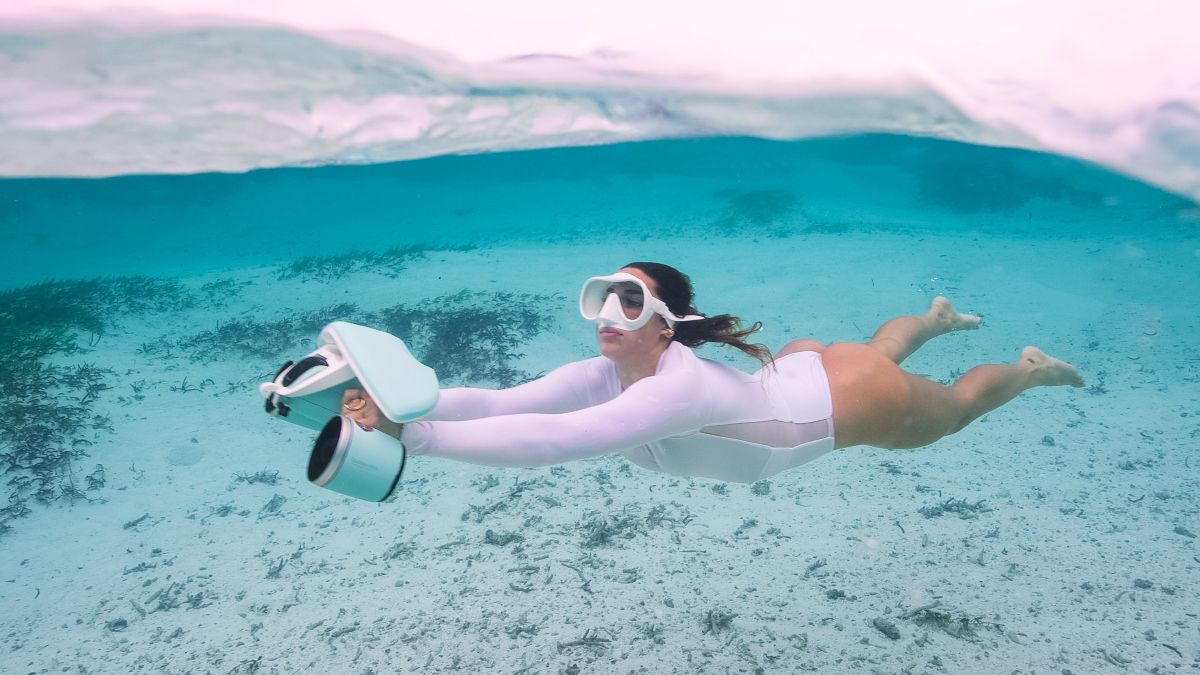
As children become more comfortable in the water, families can gradually add new experiences: underwater filming, kayaking, paddleboarding, underwater scooters, and other water sports.
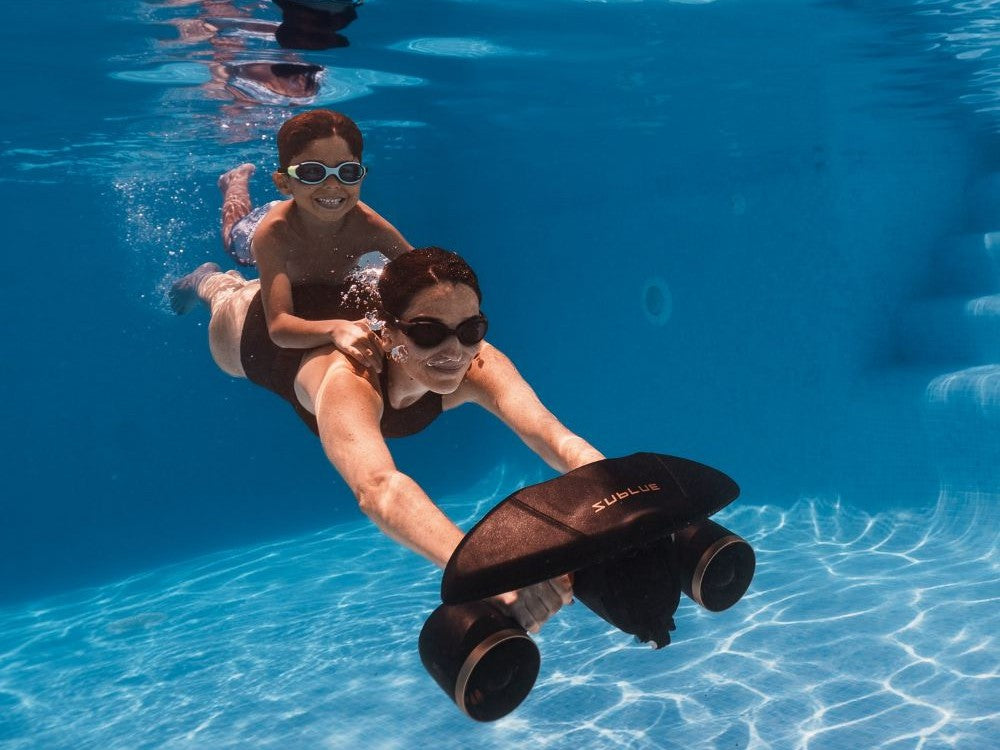
For families considering an underwater scooter, the right choice should be based on the child's age and ability, the family's activities, portability, and the type of water experience they want—not simply maximum speed.
Within the SUBLUE range, the Mix series is the most relevant starting point for families looking for a lightweight recreational underwater scooter, while the Navbow series is better suited to users who are increasingly interested in underwater exploration and photography. VAPOR series is designed for a more powerful riding experience, particularly around boats, yachts, and open water.
The bigger conclusion is simple:
Children are most likely to develop a lasting sense of adventure when parents explore with them—not when parents simply arrange activities for them.

What Does “Adventure” Mean to a Child?
For adults, adventure often means traveling somewhere new, trying an unfamiliar activity, or doing something physically challenging.
For children, it can be much simpler.
A child seeing a fish through a snorkeling mask for the first time is an adventure.
Finding a small crab hiding between rocks can be an adventure.
Getting into a kayak with a parent and paddling along the coastline can be an adventure.
Taking an underwater photo and discovering something unexpected in the picture can be an adventure.
This is why a family ocean vacation does not need to be packed with activities.
The ocean already provides the setting.
Parents simply need to create opportunities for children to look, try, discover, and participate.
1.Start With the Family's Everyday Ocean Moments
The spirit of adventure often begins before anyone gets into the water.
Imagine arriving at a coastal destination with your children.
Instead of immediately moving from the hotel to a scheduled activity, take a walk along the shoreline.
The ocean itself is something to explore.
This is particularly valuable for younger children who may not yet be ready for more structured water sports.
2. Make the First Water Experience Comfortable
The first ocean experience can shape how a child feels about water for years.
A child who is already comfortable swimming may still feel nervous when:
- Salt water gets into their mouth
- Waves move their body unexpectedly
- A mask feels unfamiliar
- They cannot see clearly underwater
- The bottom looks deeper than expected
- Fish suddenly swim nearby
That is normal.
Instead of planning a long snorkeling session immediately, give children time to become familiar with the environment.
Start at the beach.
Then try swimming.
Then practice putting the face in the water.
Then introduce a mask.
Then try a short beginner snorkeling session in suitable conditions.
The progression does not have to happen in one day.
The objective is not to make children “good at snorkeling.”
It is to make them think:
“I want to see what is over there.”

3. Let Snorkeling Become a Treasure Hunt
Once children are comfortable with the water, snorkeling can become one of the simplest ways to introduce ocean exploration.
But telling a child to “go snorkeling” may not be enough.
Give them something to look for.
For example:
Ocean Explorer Challenge
Find one fish with stripes.
Find something hiding under a rock.
Find three different colors.
Spot a sea turtle without getting close to it.
Find something moving that you cannot immediately identify.
This turns snorkeling into an exploration game.
It also encourages children to pay attention to the environment instead of simply swimming from one point to another.
For families, this is one reason snorkeling works so well as an entry point to family water activities.
It can be educational without feeling like a lesson.
4. Give Children a Role in the Adventure
Parents often handle everything during a vacation:
Packing the equipment.
Checking the weather.
Choosing the activity.
Taking the photos.
Making the decisions.
Children then become passengers.
A better approach is to give them small responsibilities appropriate to their age.
Before heading to the beach, a child can help:
- Pack the snorkeling equipment
- Check whether the camera is charged
- Help organize the family's vacation ocean gear
Older children who meet the applicable equipment requirements can also learn how to prepare and operate appropriate water equipment under adult supervision.
The point is not to make children responsible for safety decisions.
Parents remain responsible for those decisions.
The point is to help children feel:
“I am part of this trip.”
That feeling is an important part of developing independence and confidence.
5. Turn Underwater Filming Into a Shared Project
Children often become highly engaged when they can document what they discover.
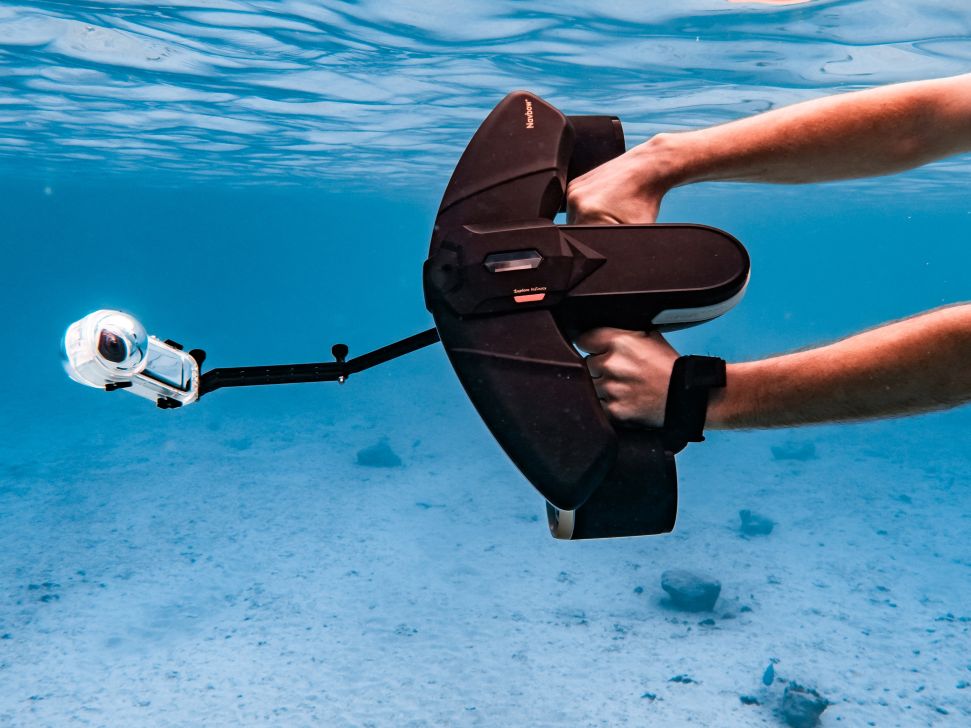
This makes underwater filming a natural extension of snorkeling.
A waterproof phone case can be enough for casual family memories.
An action camera can provide better footage for families who regularly spend time in the water.
Instead of simply handing a camera to a child, create a small mission:
“Let's make a 30-second video of today's ocean adventure.”
The child can decide:
- What to film
- Which fish to look for
- When to start recording
- Which clip they like best
After the activity, watch the footage together.
You may discover that the most interesting part of the video was something nobody noticed in the water.
That creates another kind of exploration:
Discovering the ocean twice—first in the water, then through the footage.

6. When Should Families Add an Underwater Scooter?
An underwater scooter can be a natural next step once a family is already comfortable with recreational water activities.
The key is to choose the scooter according to the user and the experience.
For families, an underwater scooter can be useful when children or parents want to:
- Explore underwater with less continuous swimming
- Cover a larger area where appropriate
- Add propulsion to snorkeling
- Capture moving underwater footage
- Make a beach or boat trip more interactive
But an underwater scooter should not be introduced simply because it looks more exciting.
The user needs to meet the product's age and operating requirements and be capable of using it safely.
Where Does Sublue Mix Fit?
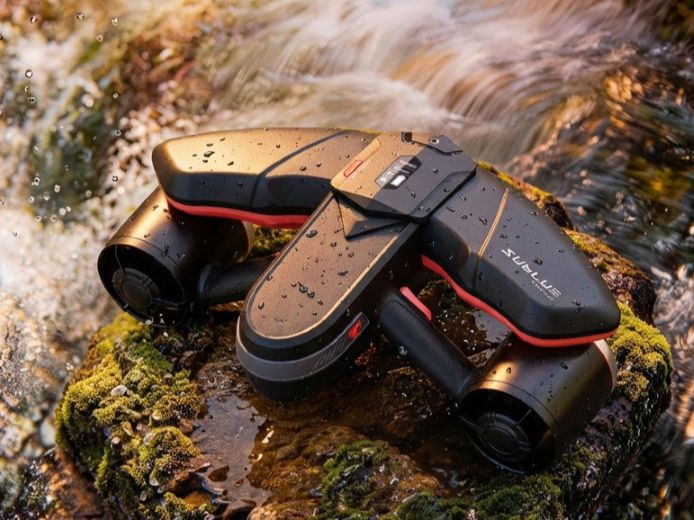
The Sublue Mix series is particularly relevant to families looking for a compact recreational underwater scooter.
The Mix 2026 weighs approximately 3.5 kg and features two speed modes. It is designed for recreational water activities, including snorkeling and family-oriented use, and supports action-camera mounting.
Its portability is an important advantage for family travel.
Instead of adding a large piece of specialized equipment to the luggage, families can take a relatively compact underwater scooter to a beach, resort, pool, or suitable snorkeling destination.
7. Let Their Interests Decide What Comes Next
Not every child will become interested in the same part of the ocean.
One child may love marine animals.
Another may become fascinated by cameras.
Another may want to know how an underwater scooter works.
Another may simply enjoy swimming.
Parents can follow those interests rather than forcing everyone toward the same activity.
If They Love Marine Life
Focus on snorkeling, reef exploration, wildlife watching, and marine education.
If They Love Photography
Introduce underwater filming and underwater photography.
If They Love Technology
Explain how an underwater scooter uses a motor and propulsion system to move through the water.
If They Love Speed
As they become older and more experienced, they may eventually become interested in more advanced water sports, diving, DPVs, eFoil, or hydrofoil activities.
The important thing is progression.
Interest comes first. Equipment comes second.

8. When Navbow Makes More Sense Than Mix
As children grow older and the family's interest in underwater exploration becomes more serious, the requirements may change.
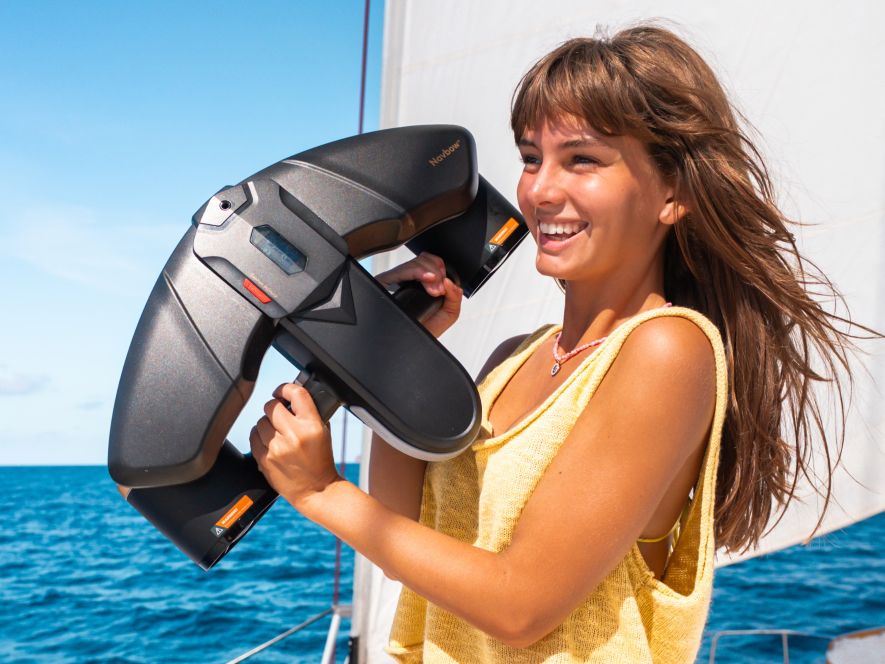
This is where the Sublue Navbow series fits differently from Mix.
The Navbow is designed more specifically around underwater exploration and snorkeling, with features that are useful for users interested in underwater photography and exploration.
For example, a family that has already spent several vacations snorkeling may want to move beyond simply swimming around a reef.
They may want to:
- Explore underwater for longer
- Capture more underwater footage
- Monitor more information while exploring
- Make underwater exploration a central part of the trip
In that case, Navbow can make more sense than a basic recreational model.
The Navbow+ takes this further with more professional underwater functions compared with Navbow, making it better suited to users who want additional information and control during underwater exploration.
So the decision can be simplified:
Mix → family recreation and beginner-oriented underwater fun
Navbow → snorkeling, underwater exploration, and photography
Navbow+ → more advanced underwater functions
This is a more useful way to compare underwater scooters than simply asking which model has the highest specifications.
9. Teach Children That Adventure Includes Responsibility
The ocean is exciting partly because it is unpredictable.
That also means children need to learn that adventure comes with responsibility.
Before entering the water, families should consider:
Weather
Check forecasts and local warnings.
Water Conditions
Understand waves, currents, visibility, and other local conditions.
Equipment
Use equipment appropriate for the user and follow manufacturer instructions.
Supervision
Children require appropriate adult supervision based on their age, ability, and activity.
Marine Life
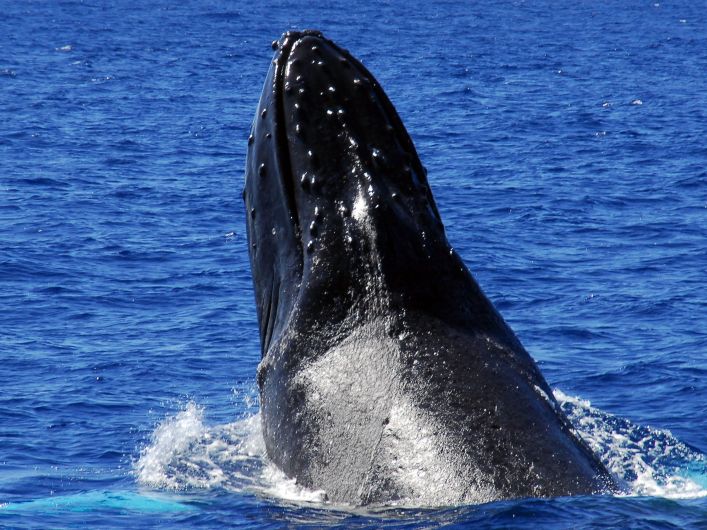
Observe wildlife without touching, feeding, chasing, or disturbing it.
Fatigue
Knowing when to stop is part of good water judgment.
These lessons are valuable beyond the ocean.
A child who learns to check conditions before kayaking is learning to prepare.
A child who learns not to chase a turtle is learning respect.
A child who knows when they are tired is learning self-awareness.
That is part of the spirit of adventure too.
10. The Family Ocean Gear Checklist
A family does not need to bring every possible piece of vacation ocean gear.
A practical setup can be built around the activities planned for the trip.
For Beginner Snorkeling
- Mask
- Snorkel
- Fins
- Appropriate flotation or safety equipment
- Sun protection
For Underwater Filming
- Waterproof phone case
- Action camera
- Spare battery
- Dry bag
For Underwater Exploration
- Suitable snorkeling equipment
- Appropriate underwater scooter
- Camera mount where compatible
- Safety equipment
For Beach and Boat Days
- Dry bag
- Towels
- Reusable water bottle
- Sun protection
- Change of clothes
For families considering an underwater scooter, portability can be particularly important.
A product that is excellent in the water but difficult to transport may not be the best choice for a weekend family trip.
This is one reason the compact design of the Sublue Mix is relevant to family travel.

What Is the Best Sublue Underwater Scooter for a Family?
There is no single best model for every family.
The better question is: what kind of family ocean experience are you planning?
| Family Scenario |
Recommended Sublue Direction |
Why |
| Beginner snorkeling | Mix |
Compact, lightweight recreational design |
| Family beach vacation | Mix |
Easy to transport and suited to recreational use |
| Snorkeling + filming | Mix / Navbow |
Both can support recreational underwater exploration, with Navbow better suited to exploration and photography |
| Underwater photography | Navbow |
More exploration-focused |
| Advanced underwater exploration | Navbow |
Adds more professional underwater functions |
| Yacht vacation | VAPOR / VAPOR Pro |
Higher-performance underwater riding |
| Open-water recreation | VAPOR / VAPOR Pro |
Designed around a more powerful riding experience |
This makes the Sublue product range easier to understand.
Mix is not simply a smaller Navbow.
Navbow is not simply a slower VAPOR.
Each is designed around a different type of recreational water experience.
11. Make “Adventure” a Family Habit, Not a One-Time Vacation
The biggest impact may come from what happens after the vacation.
A child who enjoys one snorkeling trip may become interested in marine biology.
A child who enjoys filming underwater may become interested in photography.
A child fascinated by an underwater scooter may become interested in engineering or water sports.
The first experience does not have to produce a particular outcome.
It simply needs to create curiosity.
Families can continue that curiosity at home:
- Watch marine documentaries
- Learn to identify local fish
- Look at underwater photographs
- Research the next destination
- Plan another snorkeling trip
- Learn about ocean conservation
- Build a family list of marine animals to see
This turns one vacation into an ongoing ocean lifestyle.
FAQ
What is the best way to introduce kids to ocean activities?
Start with activities that match their existing comfort level, such as swimming, beach exploration, and beginner snorkeling in suitable conditions. Gradually introduce more activities as their confidence develops.
Is snorkeling suitable for children?
It can be, provided the child is comfortable in the water, the conditions are appropriate, the equipment fits properly, and they receive suitable adult supervision. Parents should follow local rules and the guidance of qualified instructors or operators where appropriate.
What is the best underwater scooter for a family vacation?
For families looking for a compact recreational option, Sublue Mix is a strong starting point. It weighs approximately 3.5 kg and is designed for recreational water activities and snorkeling. The current product is recommended for users aged 14+.
Can an underwater scooter be used for underwater filming?
Yes. An underwater scooter can provide propulsion while a compatible action camera or other waterproof camera records the experience. However, users should prioritize safe operation and avoid using propulsion to chase marine animals.

Final Verdict: Adventure Is Something You Share
Passing on the spirit of adventure does not mean giving children increasingly difficult activities.
It means showing them that there is always something new to discover.
A family snorkeling session can become a search for colorful fish.
A waterproof camera can turn a swim into an underwater filming project.
An underwater scooter can transform recreational snorkeling into a different kind of underwater exploration when the user is old enough and appropriately prepared.
Within the Sublue range, Mix is the most natural starting point for families looking for a lightweight, portable recreational underwater scooter. As interests develop, Navbow offers a stronger focus on underwater exploration and photography. For families whose ocean trips increasingly revolve around boats, yachts, and higher-performance riding, the VAPOR series provides a different level of underwater propulsion.
But the product is never the most important part.
The real goal is to create moments that make children want to ask questions:
What is underneath us?
What lives here?
Where does that fish go?
Can we come back tomorrow?
Those questions are where adventure begins.
And when parents explore alongside their children—rather than simply watching from the shore—they are passing on something much more valuable than a hobby.
They are passing on curiosity, confidence, respect for nature, and the desire to keep exploring.
That is how a family beach trip becomes an ocean experience.
And, eventually, how a single weekend by the sea can become the beginning of a lifelong relationship with the water.
Share:
Sublue Navbow vs LEFEET P1 & P1 XR: Which Sea Scooter Is Better for Snorkeling and Ocean Exploration?