


The Best Technology Is the One You Don’t Notice
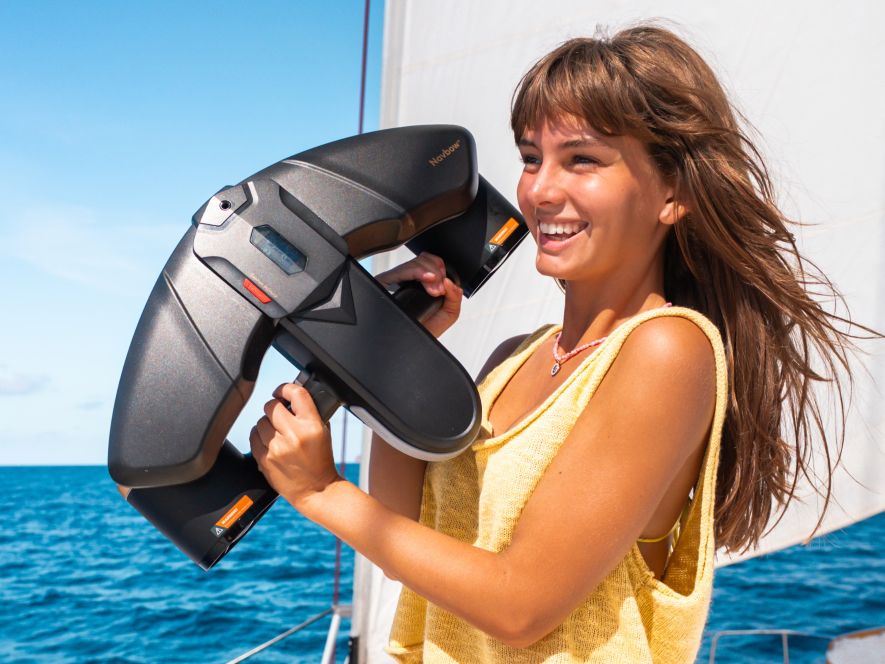
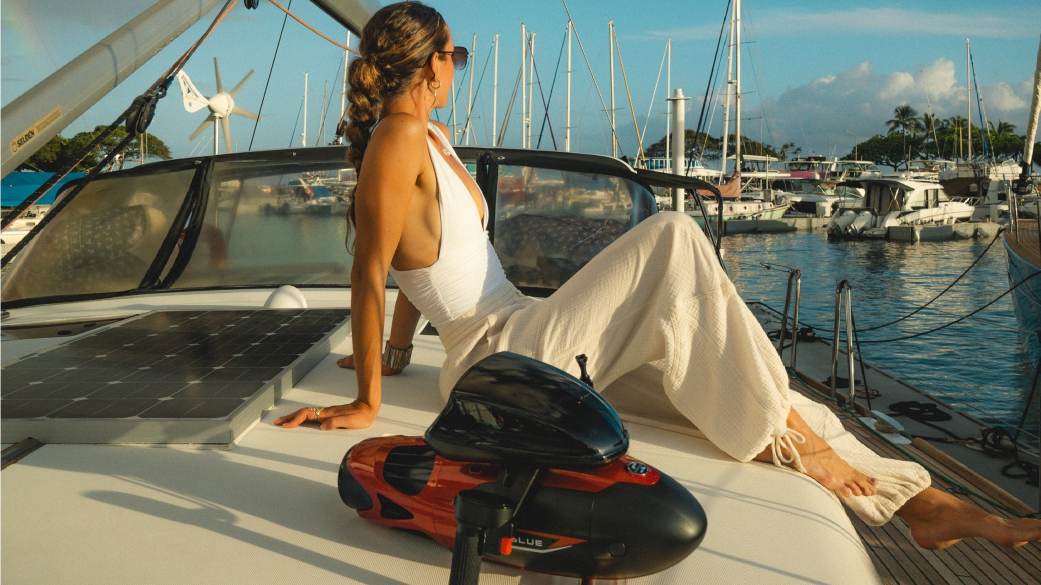
Imagine slipping into clear blue water from the back of a yacht. With one hand on an underwater scooter, you press the trigger and glide across the reef. The ride feels smooth, controlled, and almost effortless.
So, how do underwater scooters work? Every sea scooter moves by accelerating water backward, which creates an equal reaction that carries the scooter—and the rider—forward. What changes from one model to another is the propulsion system used to move that water.
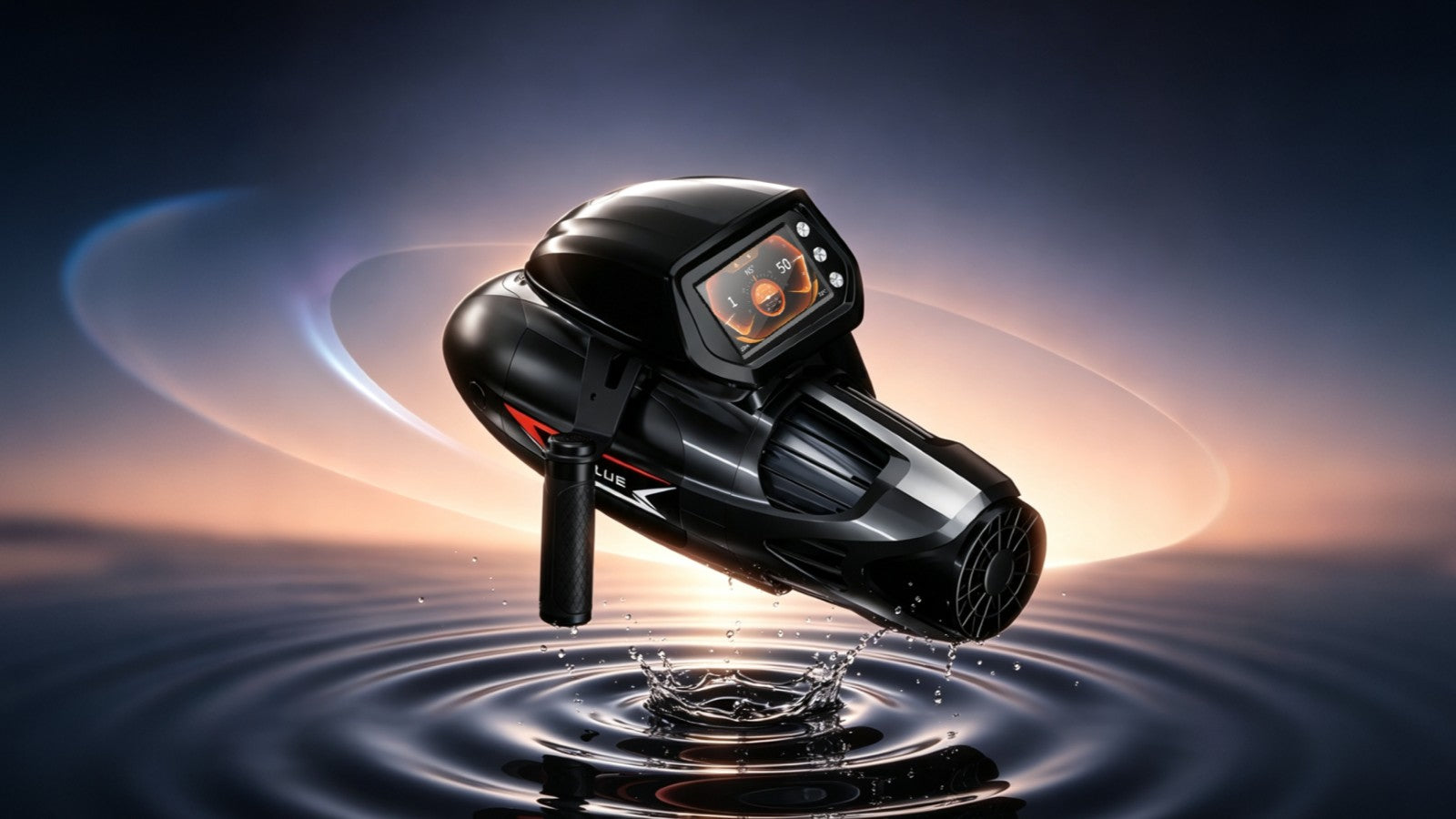
Traditional underwater scooters generally use a guarded propeller. Newer designs, including the SUBLUE VAPOR Series, use enclosed pump-jet propulsion. Understanding that difference helps explain why two scooters with similar specifications can feel very different in the water.
Quick Answer: How Does an Underwater Scooter Work?
An underwater scooter uses a rechargeable battery to power an electric motor. The motor turns a propeller or an enclosed impeller, pushing water backward and generating forward thrust. A rider holds the scooter’s controls and lets the device pull them through the water.
A conventional propeller pushes water directly through rotating blades. A pump-jet draws water into a duct, accelerates it with an enclosed impeller, straightens the flow, and releases it through the rear outlet. Both systems follow the same physics, but they manage water flow differently.

Why the Propulsion System Matters
Speed and battery runtime are important, but propulsion affects the whole ride. It can influence acceleration, noise, vibration, stability, handling, debris resistance, and the smoothness of underwater footage. For a broader technical overview, read about the science behind underwater scooter propulsion.
- The propulsion system can affect:
- How smoothly the scooter accelerates
- How much noise and vibration the rider feels
- How stable the scooter feels while turning or filming
- How exposed the rotating components are
- How easily weeds, lines, or floating debris can interfere with propulsion
- How comfortable the ride feels during snorkeling or longer sessions
The Basic Physics: Push Water Back, Move Forward
Underwater scooters follow Newton’s Third Law: for every action, there is an equal and opposite reaction. The scooter accelerates water backward; the reaction force pushes the device and rider forward.
This principle is universal. The meaningful engineering difference is how efficiently and predictably the system controls the water. Thrust matters, but it is only one part of real-world performance. Our underwater scooter thrust guide explains why a larger thrust number does not automatically make a scooter the better choice.

The Five Core Components of an Underwater Scooter
1. Rechargeable Battery
The battery supplies energy to the motor and electronic controls. Capacity, power delivery, thermal management, and waterproof sealing all influence performance. Runtime varies with speed, rider load, water conditions, and riding style. See our guide to underwater scooter battery life for the factors that affect real-world use.
2. Electric Motor
The motor converts electrical energy into rotational motion. Its output must be controlled precisely so the scooter can accelerate predictably and maintain stable speed.
3. Propulsion System
The propulsion system turns the motor’s rotation into water flow and forward thrust. Most recreational models use either a guarded propeller or an enclosed pump-jet.
4. Electronic Controls
Triggers, speed settings, sensors, and control software regulate power delivery. More advanced models may display speed, battery status, attitude, depth, or other ride information.
5. Waterproof, Pressure-Resistant Housing
Seals and structural housings protect the battery, motor, and electronics from water ingress and pressure. Depth rating and maintenance requirements vary by model.

Traditional Propeller Underwater Scooters
A propeller-based scooter uses a straightforward sequence:
- The battery sends power to the motor.
- The motor spins the propeller.
- The blades push water backward.
- The reaction force pulls the rider forward.
Propeller systems are proven, compact, and effective. Most recreational designs place a protective grille or shroud around the propeller. Depending on the design, however, the flow may produce more noticeable turbulence, noise, or vibration, and weeds or loose lines can still enter the guarded area.
How Pump-Jet Propulsion Works
A pump-jet manages water inside an enclosed flow path:
- Water enters through the intake.
- An enclosed impeller accelerates the water.
- Stator vanes help straighten the rotating flow.
- The water exits through the rear outlet to generate thrust.
The easiest way to picture pump-jet vs. propeller propulsion is to compare an open fan with a ducted airflow system. Both move fluid, but the ducted system guides the flow before releasing it. In an underwater scooter, that controlled flow can support smoother acceleration and a more refined ride.
Pump-Jet vs. Propeller: Key Differences
|
Feature |
Guarded propeller |
Enclosed pump-jet |
|
Water flow |
Blades push water directly |
Impeller accelerates water inside a duct |
|
Rotating assembly |
Propeller sits behind a guard or shroud |
Impeller sits inside an enclosed flow channel |
|
Ride character |
Efficient and direct; feel varies by design |
Designed for controlled flow and smooth delivery |
|
Noise & vibration |
Depends on propeller, motor, and housing |
Can reduce perceived noise and vibration |
|
Debris interaction |
Weeds or lines may enter the guard |
Enclosed channel can reduce direct exposure |
|
Typical appeal |
Simplicity, portability, proven design |
Refined handling, comfort, premium performance |

How the SUBLUE VAPOR Series Uses Pump-Jet Technology
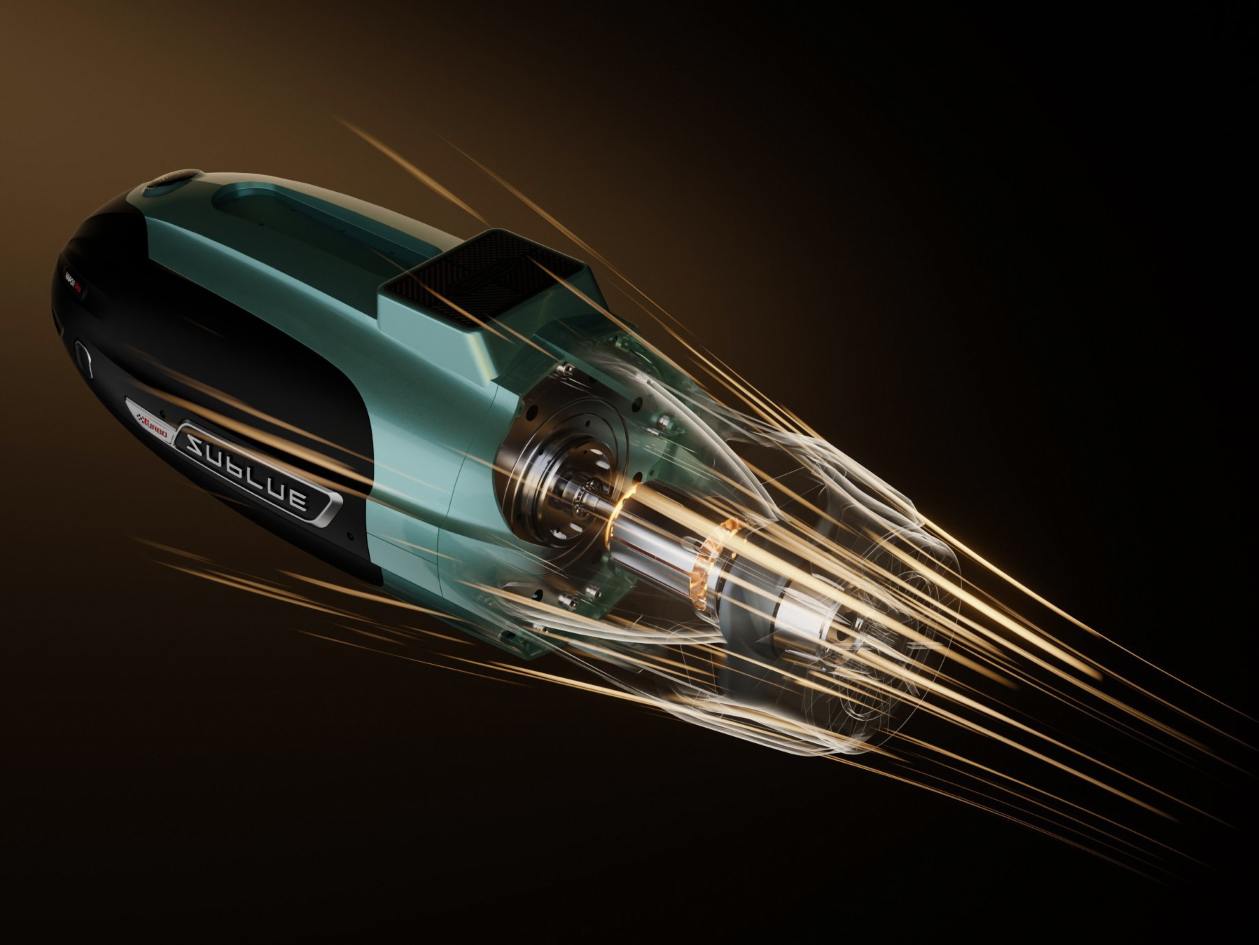
The SUBLUE VAPOR Series replaces a conventional exposed propulsion layout with a fully enclosed pump-jet system built around DeepInfar’s ALO 2.0 (Active Loop Optimization) technology.
The propulsion architecture combines:
- A six-blade impeller that accelerates water through the propulsion channel
- A twelve-vane rear stator that straightens and optimizes the flow before it exits
- An enclosed duct designed to manage water in a controlled path
For riders, the practical goals are more important than the terminology:
- Smooth and predictable power delivery
- Lower perceived noise for a more immersive ride
- educed vibration during extended use and underwater filming
- Better resistance to weeds, ropes, and light floating debris
- Greater separation between the rider and the rotating impeller
SUBLUE VAPOR delivers up to 210 N of thrust and a top speed of 10 km/h, while SUBLUE VAPOR Pro increases maximum thrust to 249 N and reaches up to 12 km/h. These figures describe peak capability; rider weight, drag, water conditions, and battery status all influence real-world speed.
For a model-by-model look at premium pump-jet performance, see our VAPOR vs. SEABOB F9 comparison.
What Pump-Jet Propulsion Feels Like in Real Use
Technology matters when it improves the experience. Smoother power delivery can make it easier to hold a steady line beside a reef, follow marine life, or compose a shot without abrupt movement. Quieter operation can also make the ride feel less intrusive.
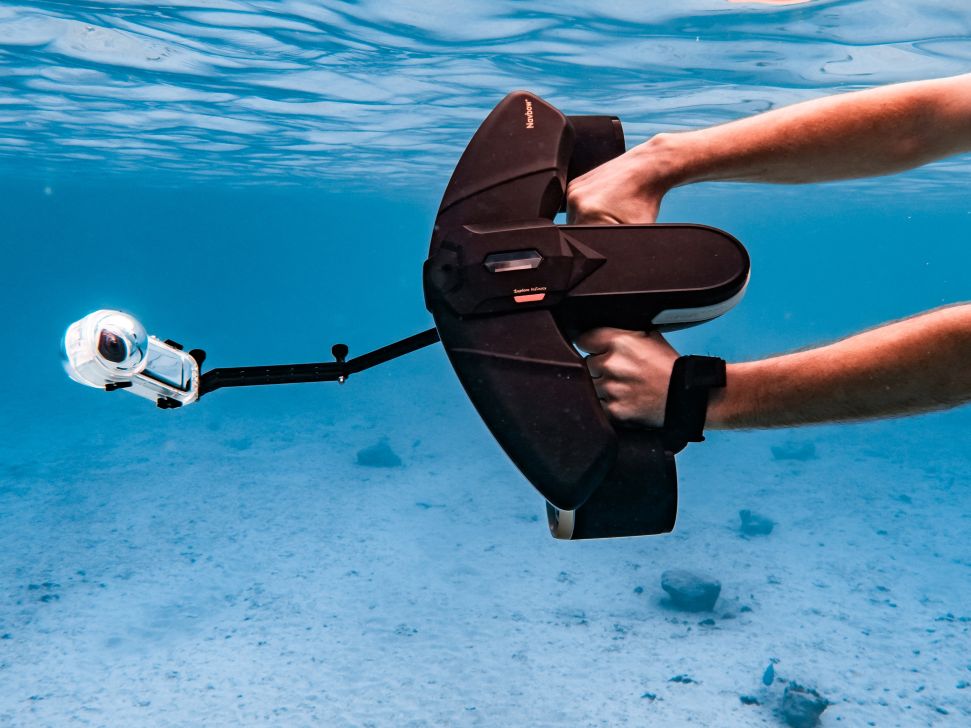
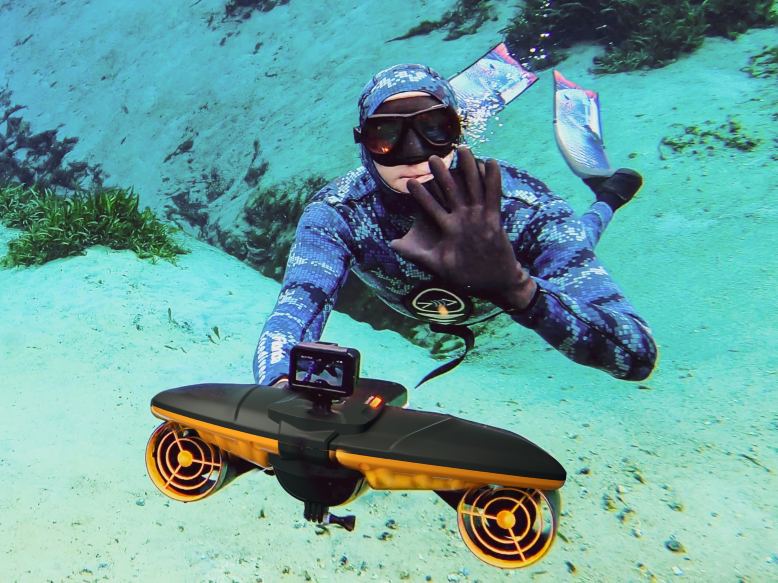
Those qualities are especially relevant when using underwater scooters for snorkeling, exploring from a yacht, or learning to film with an underwater scooter.
Common use cases include:
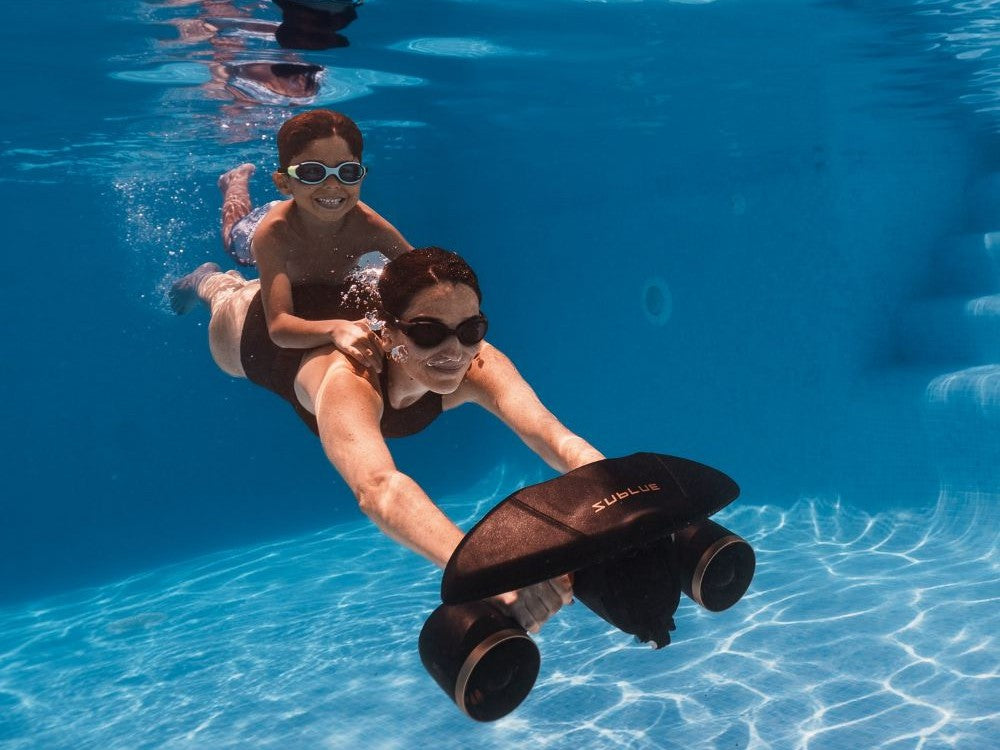
- Snorkeling over reefs without constant finning
- Capturing steadier underwater video
- Exploring from yachts, beaches, and resorts
- Recreational diving within the scooter’s rated depth
- Navigating water with light sea grass or floating debris
Is Pump-Jet Technology Better for Everyone?
Not automatically. The right propulsion system depends on how and where you plan to ride.
A propeller-based scooter may suit you if:
- Portability and straightforward operation are your priorities
- You mainly want casual pool, beach, or snorkeling fun
- You prefer a broad choice of compact recreational models
A pump-jet scooter may suit you if:
- You want strong performance with smooth power delivery
- Low noise and reduced vibration matter for filming or longer rides
- You value an enclosed propulsion channel
- You want a premium scooter for ocean, yacht, or adventure use
Propulsion should not be the only deciding factor. Compare speed settings, runtime, depth rating, weight, buoyancy, controls, accessories, and intended use. Start with our practical guide on how to choose the right underwater scooter.

Safe and Efficient Riding Tips
- Read the manufacturer’s instructions and inspect seals, guards, and controls before entering the water.
- Start at the lowest speed until you understand the scooter’s acceleration and stopping distance.
- Keep hair, straps, fishing line, and loose equipment away from any intake or propulsion opening.
- Stay within your swimming, snorkeling, or diving ability and the product’s rated depth.
- Do not rely on a scooter as a life-saving device or a substitute for proper dive training.
- Rinse and dry the scooter as instructed after saltwater use.
Review these underwater scooter safety tips before your first ride. If you expect currents, waves, pools, lakes, or changing visibility, also read about using a sea scooter in different water conditions.
FAQ
How do underwater scooters move forward?
They use an electric motor to drive a propeller or impeller that accelerates water backward. The equal and opposite reaction produces forward thrust.
What is the difference between pump-jet and propeller propulsion?
A propeller pushes water directly with rotating blades, usually behind a guard. A pump-jet places an impeller inside a duct, guides the water through the channel, and straightens the flow before it exits.
Is a pump-jet safer than a propeller?
An enclosed pump-jet provides more separation from the rotating impeller than an exposed layout. However, every propulsion system still requires correct handling, inspection, and distance from hair, straps, lines, and debris.
Are pump-jets quieter than propellers?
A well-designed pump-jet can reduce perceived noise and vibration by managing flow inside an enclosed duct. Actual sound depends on the full motor, impeller, housing, speed, and water conditions.
Is pump-jet propulsion only useful for scuba diving?
No. Smooth, controlled propulsion can also benefit snorkeling, underwater filming, yacht vacations, and recreational ocean exploration.
Does more thrust always mean a better underwater scooter?
No. Thrust is only one factor. Handling, runtime, weight, buoyancy, depth rating, speed control, and intended use can be equally important.
Can I take an underwater scooter on a plane?
Airline acceptance depends mainly on battery watt-hours, battery removability, packaging, and carrier rules. Check the manufacturer’s battery specifications and read how to travel with an underwater scooter battery before booking.

Final Verdict
Every underwater scooter works by pushing water backward to move the rider forward. The difference is not the basic physics—it is how the propulsion system controls the water.
Traditional propellers remain effective, proven, and practical. Enclosed pump-jet systems focus on guided flow, smooth acceleration, lower perceived noise and vibration, and greater separation from rotating components.
For snorkeling, underwater filming, yacht adventures, and premium recreational exploration, pump-jet technology represents a meaningful evolution in how underwater scooters deliver thrust—not simply how much thrust they produce.



Share:
Best Ocean Gear for Weekend Getaways: Your Summer Packing Guide
European Islands You Must Visit This Summer: The Best European Island Escapes for Snorkeling, Water Sports & Ocean Adventures